

Stormwater Runoff, Blue Space Waterways Improvement
Climate Resilience , Health and Wellbeing, Nature Recovery

Chipping Sodbury School rain garden
The Eunomia natural capital accounting valuation tool estimates that this project will provide £742,390 of environmental and social benefits over a 15-year period. A cost benefit return of over 10:1 - Click the link below to view the valuation details.
Project summary
This conversion of the second of three internal courtyards, will create a beautiful, dynamic, nature rich space that pupils and staff benefit from. A nature-based solution for capturing and storing stormwater runoff from a large roof area, helping to protect the ecology of the River Frome, reduce flood risk and increase community resilience. A high profile, replicable model, inspiring and influencing the younger generation.
- Improved visual amenity, an inspiring learning and engagement space where children and staff connect with nature and enjoy health and wellbeing benefits.
- 172m2 of sealed surfaces replaced with vegetated gardens, rain gardens, permeable surfaces and Sustainable drainage systems (SuDS).
- 51% reduction in sealed surfaces, 16-fold increase in permeable surfaces and 51% increase in vegetated land.
- Natural flood management benefits, improved air quality and increased biodiversity.
- Notable uplift in climate regulation (10%), biodiversity (21%), flood regulation (51%) and air pollution removal benefits (51%).
The problem
Traditional drainage systems take rainwater from roof space away from site direct into the sewage system. These systems are now outdated and under capacity.
Our changing climate means that storms are becoming more frequent and more severe. During heavy rainfall the rainwater piped into the sewers often overloads the system. This increases the risk of flooding elsewhere in our community and can cause combined sewers to overflow and discharge sewage into nearby rivers.
Increasingly, the current system is no longer sustainable. With increasing development and overloaded sewerage systems we need to look at different solutions to allow rainwater from roof space to infiltrate direct into the soil where it falls. Action is needed to protect freshwater habitats, our homes, and communities.


-
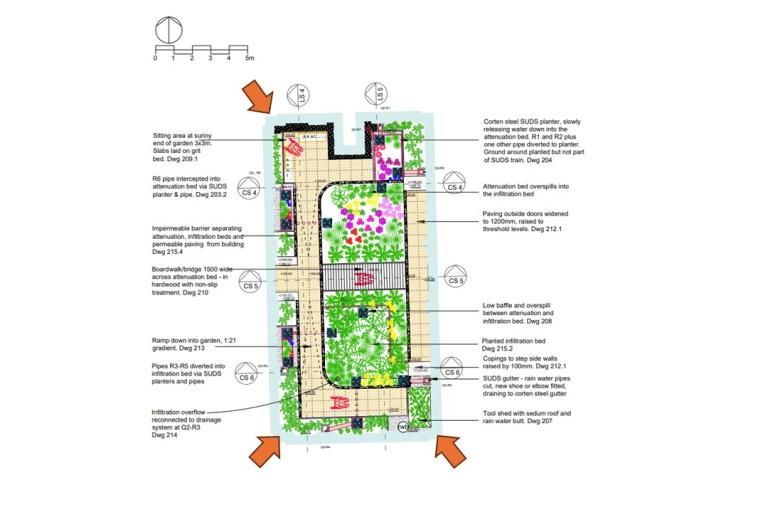
The landscape architect's drawing. Click on the link provided further down this page to see their drawing in more detail, or to download.
-
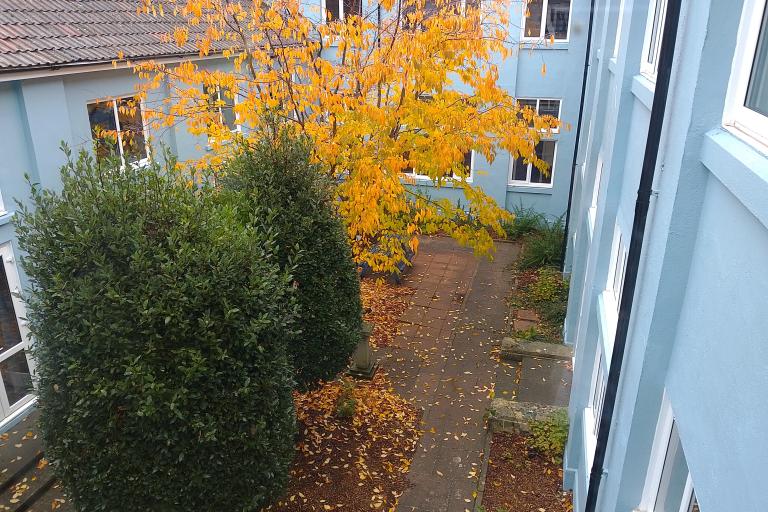
Quad 3 awaiting transformation. Through this project, this space has the potential to capture in the region of 340,000 litres of rainfall every year, reducing downstream flood risk and protecting the River Frome from potential sewage overflow.
-
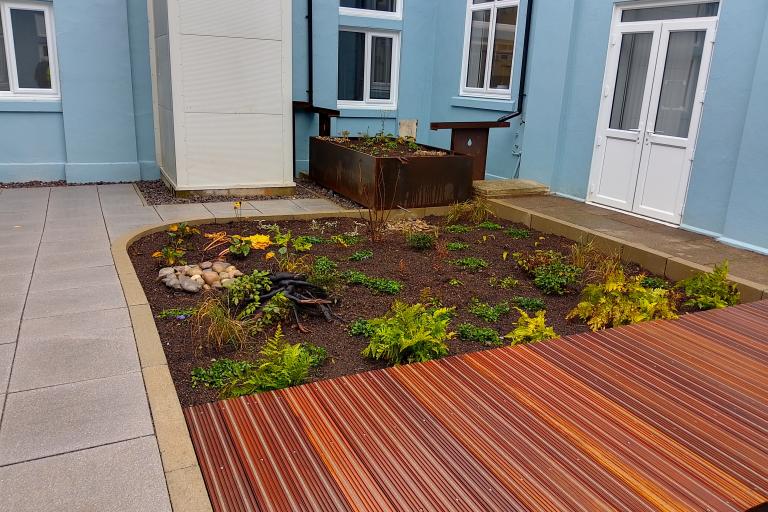
Here's one we made earlier. Quad 2 protects the community and the river while providing the students with a relaxing space that boosts their wellbeing as well as providing valuable opportunities for nature.
-
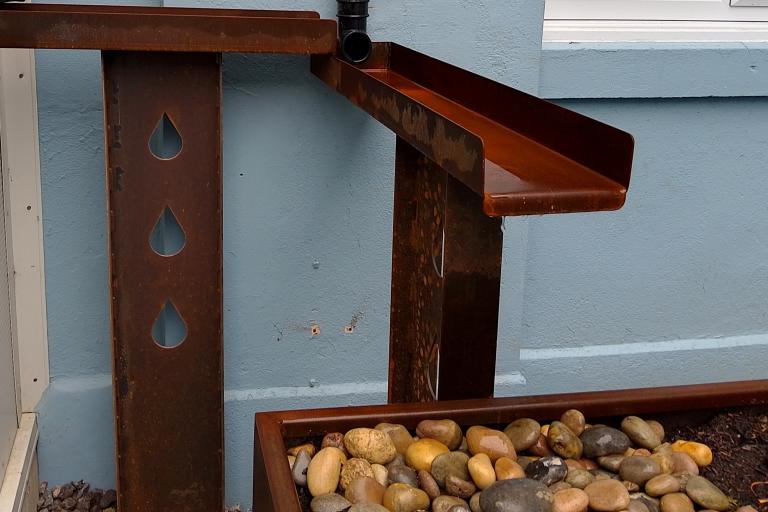
Design details add beauty and interest within a practical high functioning space.
-
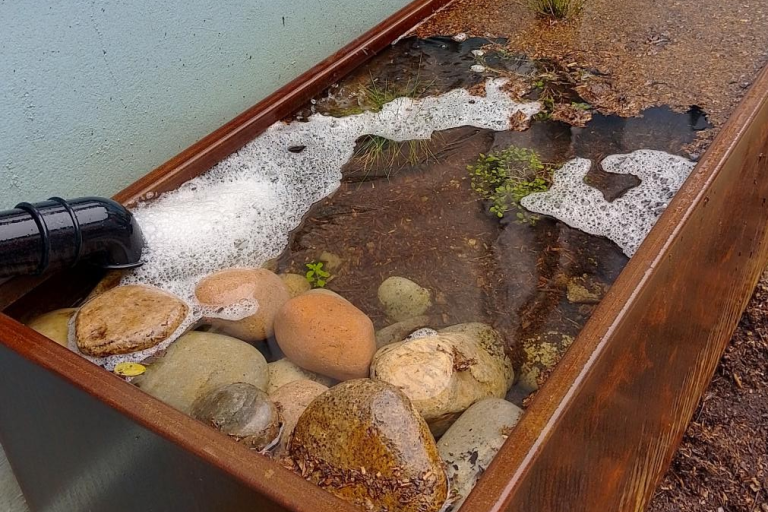
One of the planters in Quad 2 working hard to manage the runoff during a period of heavy rain.
-
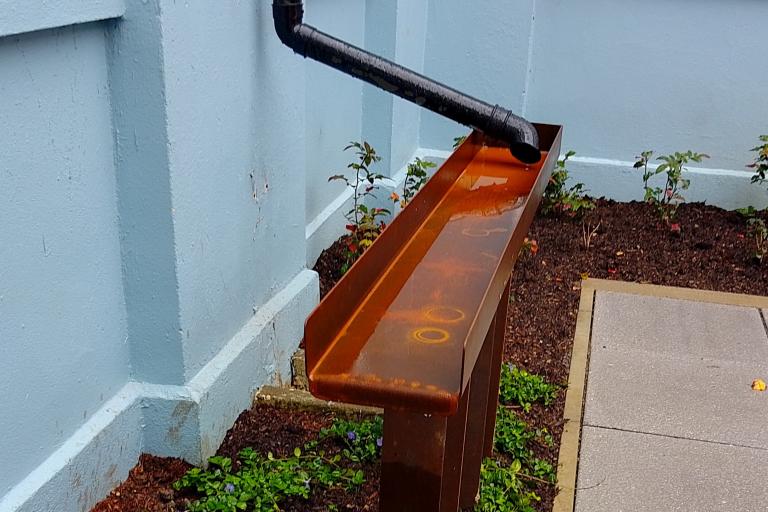
Beautiful features directing the stormwater runoff into permeable spaces where it will irrigate the garden area before slowly returning to the water table.
-
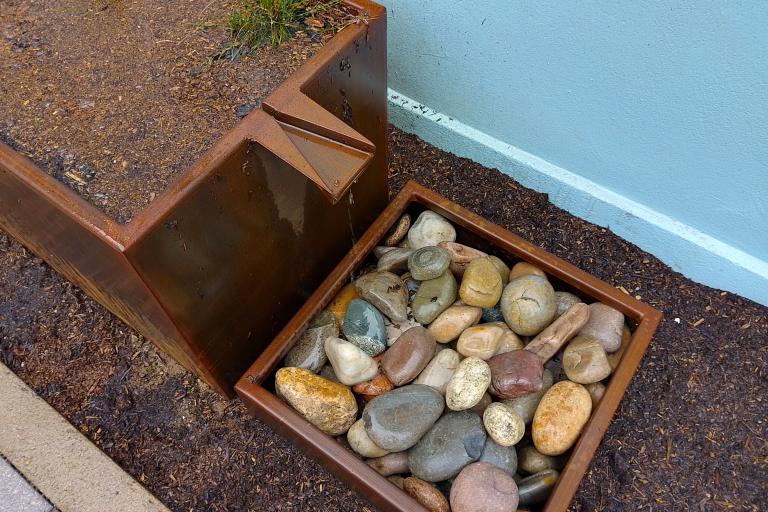
Beautiful features directing the stormwater runoff into permeable spaces where it will irrigate the garden area before eventually returning to the water table.
-
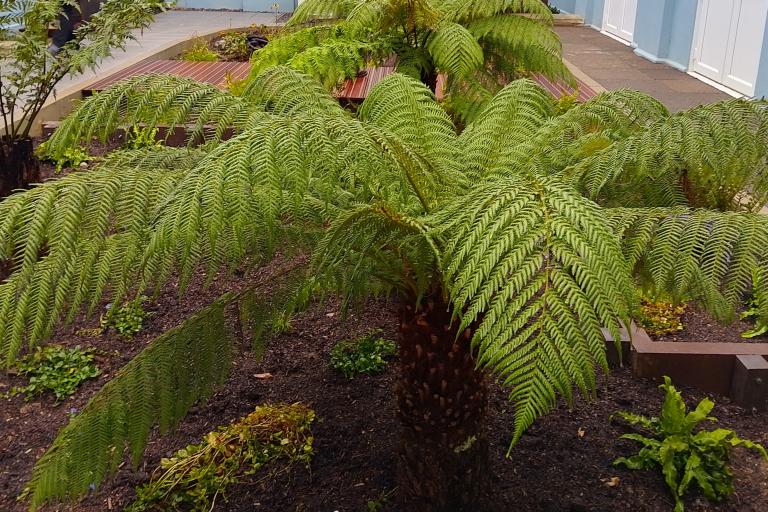
Larger plants provide a clue as to how the completed Quad 2 will look when all the plants have matured and grown.
-
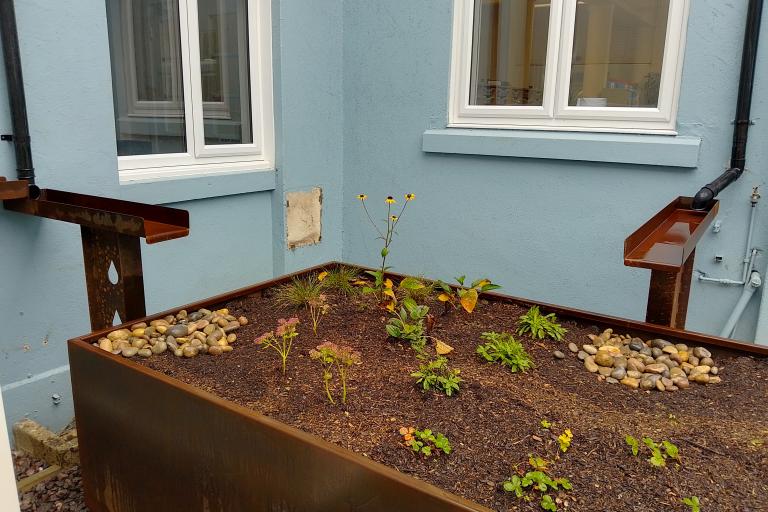
New planting in the recently completed Quad 2 will mature to create a beautiful nature rich and relaxing space.
-
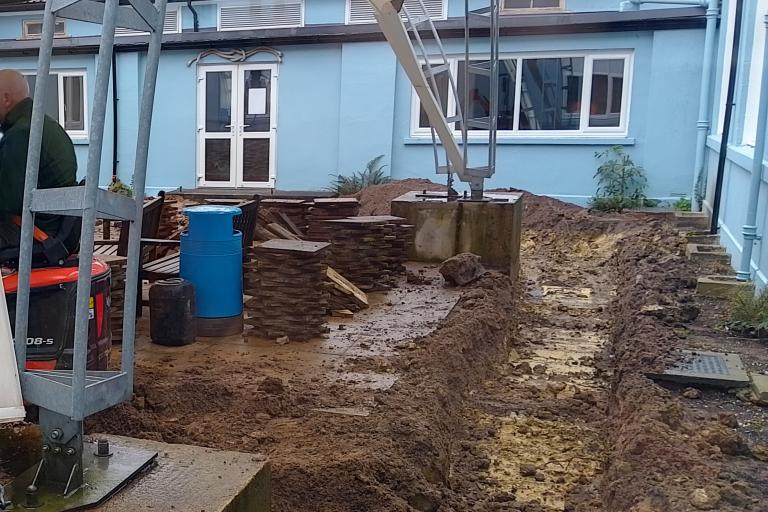
Quad 1 under construction. The canopy provides pupils with a dry space to meet during lunchbreaks. The permeable landscaping being constructed will turn a functional space into a relaxing yet thought provoking experience and an opportunity to learn about sustainability and nature recovery in a real world application.
The proposed solution
An effective solution is to capture and store as much rainfall as possible, before it enters the system. At Chipping Sodbury school, we have installed ‘rain garden’ sustainable drainage systems (SuDS) in two of the school’s internal courtyards. These capture rainwater from the roof and let the water soak into the ground where it falls, simulating natural processes and creating great habitat.
To increase the amount of water held back from the sewers we would like to construct a third rain garden in the last of the school’s courtyard spaces. The more rain gardens we build—in schools and at home—the stronger our ability to withstand flooding becomes.
Why it matters
By building the third rain garden, in combination with the 2 other courtyards, we estimate we will hold back a volume of up to 86m³ of water each time it rains. It is estimated that this third courtyard will annually prevent over 340,000 litres of water from entering the system and adding to the problem.
These rain gardens don’t just reduce the risk of flooding and protect our rivers and streams. They also provide the students with learning opportunities and beautiful, peaceful, nature-rich spaces that are great for their health and wellbeing.
We’re providing a real and working example of climate adaptation that increases community resilience. This gives students direct experience of practical solutions that enhance and enrich their lives, encouraging them to view climate challenges in a positive way.
Everyone can help! Install a water butt at home or create a small rain garden, they’re great for wildlife, reduce flood risk and increase your community’s climate resilience.