
Nature Recovery
Sth Glos Primary Schools Birdbox Project
Summary
This project delivers 10 free birdboxes to every primary school in the South Gloucestershire area. Supported by a series of online resources providing activities and session plans that encourage pupil interest and knowledge.
This project extends a programme initiated and run by Tom Rawson, a primary school teacher with a passion for the natural world and practical actions that make a difference, protect the environment and inspire the next generation. Over the last three years, Tom has distributed more than 12,000 boxes to primaries across Scotland and England.
Background
GreenTweed Eco was started by Borders primary school teacher Tom Rawson in 2018 to bring together schools, groups and charities in the Scottish Borders to tackle global environmental problems at a local level.
Tom’s Borders Birdbox Project, originally funded by the Nineveh Charitable Trust, won TOTAL’s 2020 Better Energy Schools Award and the Scottish Land & Estates 2020 Conservation Award. GreenTweed Eco was also a shortlisted finalist in the 2020 RSPB Nature of Scotland Award for Youth & Education.
The boxes are constructed from untreated Douglas Fir or Larch timber; types of wood with natural resistance to deterioration. Keen to support his local community, Tom currently uses timber that is grown in Perthshire and milled at the Perthshire Timber Company in Dunkeld.
All boxes are solidly built to a British Trust for Ornithology approved design from 19mm board using both nails and UV resistant glue. Boxes built well over a decade ago are still functioning well and continue to be occupied year after year.
There are 101 primary schools in South Gloucestershire, including 6 special educational needs schools that also cater for older children. Supplying each of these schools requires a total of 1,010 birdboxes.
If a company or organisation wants to be a major supporter of this initiative, logos can be printed onto box fronts with permanent ink, and QR codes linking to your website or education programme can be attached.


-
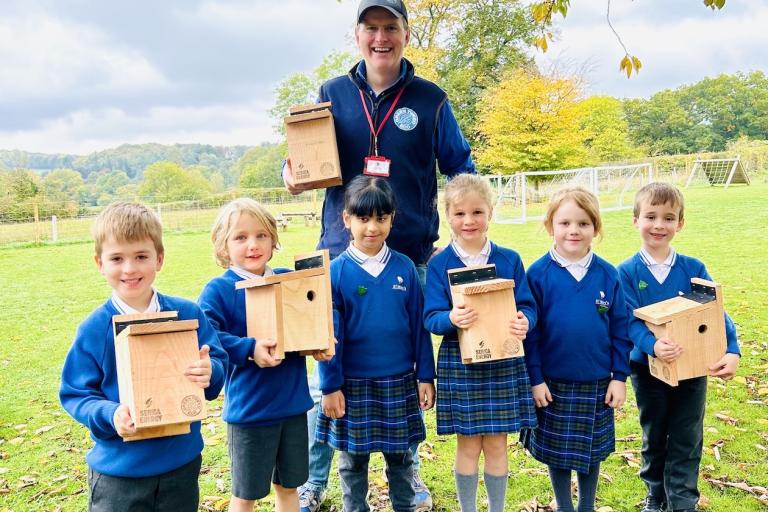
Tom empowering the next generation to care for nature.
-
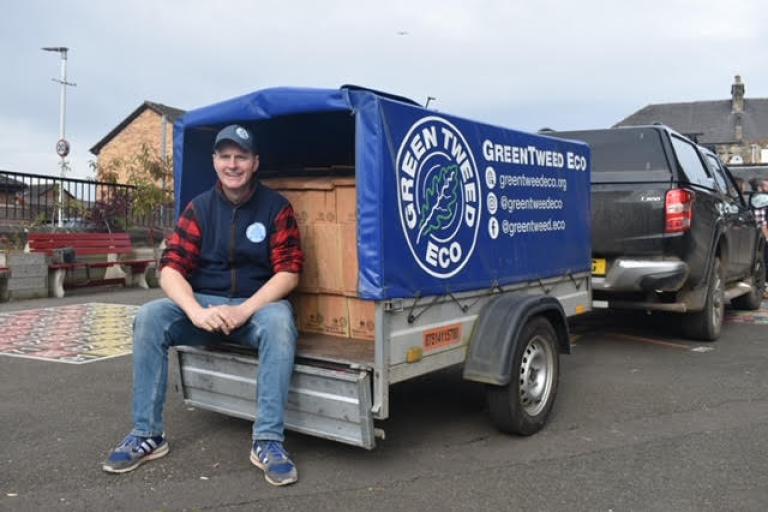
Tom delivers the boxes in person, taking the opportunity to engage with schools and share his passion and enthusiasm.
-
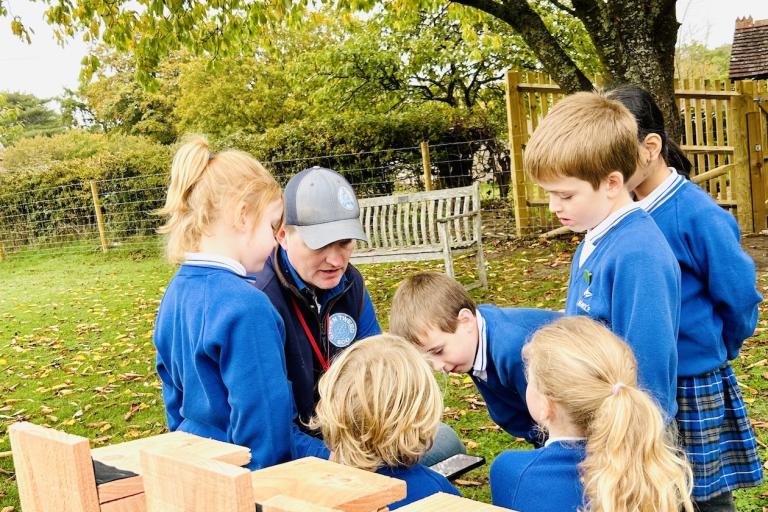
An opportunity for learning more about the natural world.
-
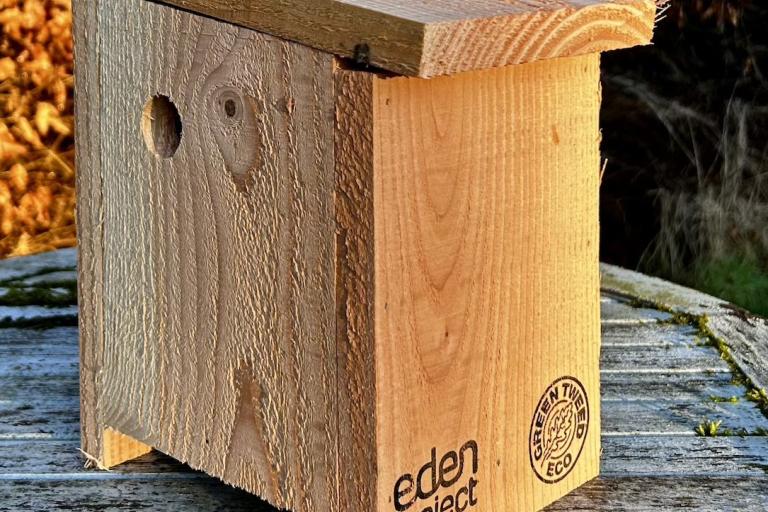
An example of the boxes provided, this one featuring a previous sponsor's logo - the fabulous Eden Project.
"Tom delivered x10 beautifully made birdboxes and talked to our Eco Committee about where to position our new boxes and how to identify different bird songs. Thank you, Tom, for our boxes and for your inspiring visit; we can't wait to see which birds find new homes with us!" Lucy Allan, Headteacher, St. Mary's C of E Infant School, Frensham, Surrey
Benefits
One of the most important issues that the South Gloucestershire Primary Schools Birdbox Project seeks to address is the perceived lack of engagement of young people with the natural world. In 2013, the RSPB "Connecting with Nature" study found that only a fifth of children were thought to demonstrate a reasonable connection to nature.
This project aims to put the wild world into the eyeline of a generation of school children. Working with pupils, teachers and schools across a significant geographic area, it provides an opportunity to make a real difference to the lived experience of thousands of children.
The 2023 UK Royal College of Paediatrics and Child Health report highlighted increasing eco-anxiety in children and young people - a significant number of adolescents and young adults (30%–49%) were very worried about the state of the planet. There are fewer studies addressing eco-anxiety in primary school-aged children (<11 years). However, in Canada and Taiwan, 10- to 11-year-old children expressed high levels of worry about environmental issues such as ‘extinction of animals and plants’ and ‘air pollution’, and 82% of American 10- to 12-year-olds expressed environmental concern, with 72% reporting pessimistic views of the future state of Earth.
While climate anxiety is already well documented among older children, very little research has been done on younger age groups until recently. Now a YouGov survey of over 600 children commissioned by Greenpeace UK shows worries about climate change are widespread among primary school children, with 78% saying they’re worried about it and over a quarter (27%) very worried.
A separate YouGov poll, also commissioned by Greenpeace UK, suggests that many teachers are finding it hard to deal with the emotional impact of this topic on children. 70% of primary teachers interviewed say they don’t have enough time in the school day to help students with concerns about climate change, and 82% say they would find lesson plans and resources to support students with these concerns useful.
This project provides an easy and accessible way for schools to respond to the biodiversity crisis. It provides an opportunity to engage pupils to take positive action, helping them to feel empowered, not powerless.
Demands on school grounds often leaves little room for action for nature. These birdboxes are small, designed for small garden bird species. They can be easily fitted to fence posts, the sides of sheds, trees (even the small ones), bike and bin stores.
Within the context of highly functional educational spaces, the boxes can represent a major boost to biodiversity. Many of the small garden bird species these boxes are designed for are amongst the most vulnerable and endangered of UK bird species. The project therefore responds to a very real and immediate environmental challenge.
As well as providing for small birds, the boxes will also serve as shelter and nesting spaces for invertebrates like moths, butterflies, beetles and important pollinators like honeybees, bumble bees and wasps.


-
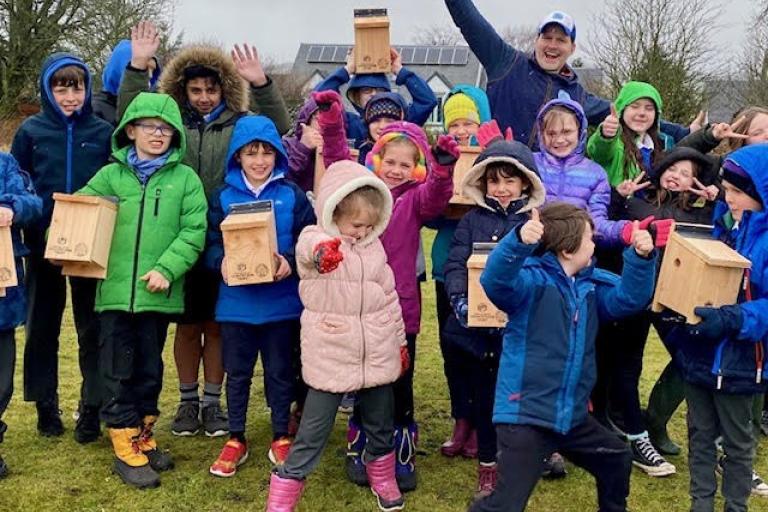
Happy and enthusiastic recipients of their new birdboxes.
-
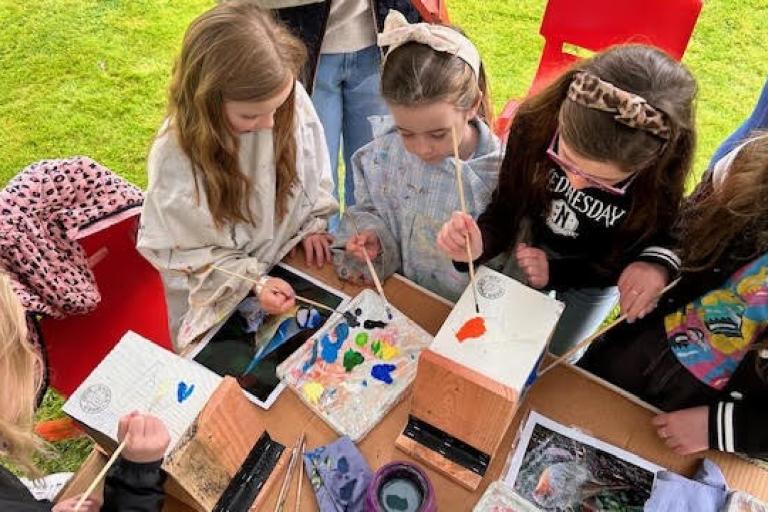
School children painting the boxes with illustrations of garden birds.
-
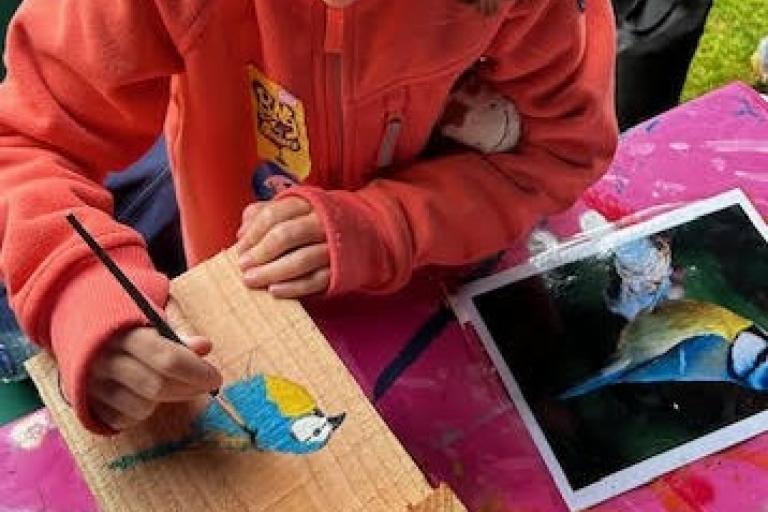
A creative young artist studying, painting, and remembering every detail.
-
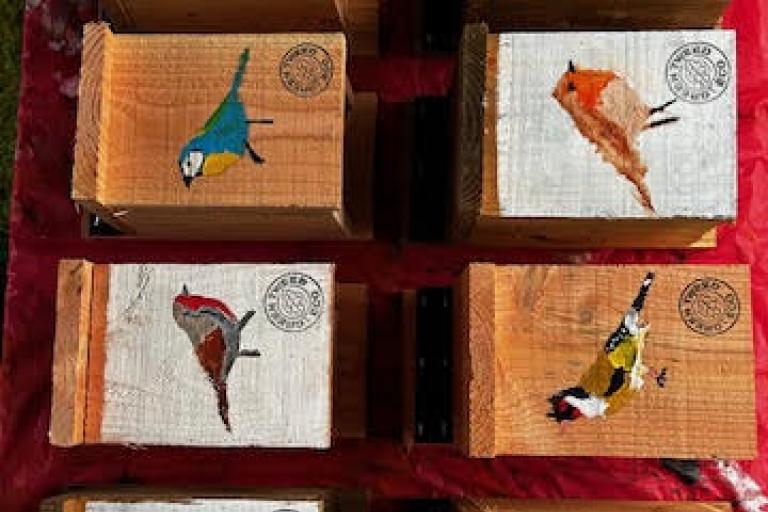
A gallery of finished paintings. The natural world inspiring creativity and learning.
"At Stoughton Infants School, we use the wild world around us to promote confidence and self-esteem in our young people. We worked with the Surrey Wildlife Trust to make Forest Schools a key part of the education that we deliver to our children. The Surrey Primary Schools Birdbox Project fits in with this perfectly”. Sue Goodall, Forest Schools Lead, Stoughton Infants School, Surrey
Why it Matters
The birds that once filled British gardens with song and movement are vanishing at an alarming rate. New data from the RSPB’s Big Garden Birdwatch (BGBW) shows severe drops in common bird numbers since 1979.
Take the house sparrow. These small, brown birds that used to gather in noisy groups are now down by 60%. Song thrushes, known for their morning melodies, have lost over 80% of their population. Greenfinches have moved from being the seventh most seen garden bird to eighteenth place, with a 69% decline.
“These changes are happening right in our backyards,” says Beccy Speight, RSPB’s chief executive. “The nature and climate emergency isn’t just affecting rare species – it’s hitting the once common birds we should see every day.”
Newly published data from the Department for Environment, Food & Rural Affairs (Defra) confirms UK bird populations are falling faster than previously recorded. Over the past five years alone, all UK bird species have declined by 4%, with the figure rising to 7% in England. Farmland bird populations (starlings, yellowhammers, skylarks) have plummeted by around 62% – a stark statistic that emphasises the scale of this natural crisis.
The most dramatic declines have been in what were once the UK's most familiar species, including sparrows, starlings and greenfinches. The starling has not fared well. It is still a regular visitor to UK gardens, ranked as number three in the BGBW survey, but the numbers recorded have fallen by over 80% over the last four and half decades. Greenfinches have been hit hard too, with counts down by over 60% over the same period.
There are many causes for the decline in UK bird populations. These include the loss of permanent pasture, increased use of farm chemicals and the decline in insect numbers that many bird species feed on. More recent issues include the spread of avian diseases and the impact of climate change and changing seasons. More frequent and more extreme weather events and temperature ranges have taken their toll. Seasonal food stock such as berries ripening and finishing before migratory species arrive can have devastating impacts. The loss of suitable habitats, places to safely find food and rest, and to nest and rear their young, remains a constant factor in the decline of species. It is this loss of habitat that this project most directly addresses.
"The South Gloucestershire Primary Schools Birdbox Project will be a brilliant opportunity to engage and inspire children and young people about the nature on their doorsteps. It will introduce them to one of the simplest ways that they can make a difference to the biodiversity crisis - by putting up nest boxes in their school grounds. They will be providing secure nesting spaces for once common species such as Tree Sparrow and House Sparrow, both of which are, rather unbelievably, on the red-list of birds of the greatest conservation concern in the UK. Pupils will be able to experience being citizen scientists, collecting data on the use of the boxes to contribute to BTO's national Nesting Neighbours scheme. The project will provide great benefit to local schools, in the short-term by making their grounds better for birds and providing immediate opportunities to learn about nature, and in the longer-term by helping to develop the future guardians of our environment. Pupils will be part of a simple positive action that they can take in response to the biodiversity and climate crises to help wildlife across a large geographic area. We are thrilled to support this exciting project.” Leuan Evans, Director of Engagement, British Trust for Ornithology
“GreenTweed Eco’s recent Primary School Birdbox Projects in the Highlands, Moray and Borders local authorities have been deceptively simple initiatives. They’ve helped protect and restore Nature in the short term, while also giving children opportunities to make connections that will have long term impacts. Of course, this is what the current biodiversity crisis needs; individuals like Tom Rawson willing to make a difference through action. We commend this work and would encourage anyone in a position to help the project to reach its ambitions to do so.” Brock Lueck, Education, Families and Youth Manager, RSPB