
Blue Space Waterways Improvement
Nature Recovery, Climate Resilience

Unlocking the Little Avon River: Naturally better for nature
Coming soon a summary of the Eunomia natural capital valuation for this project.
Summary
This project will unlock the potential of the Little Avon River to support and sustain vibrant populations of fish and other species. By removing obstacles created by man-made structures, we’re reconnecting a fractured freshwater landscape, restoring and extending access to improved habitat opportunities for six priority or protected species:
- European Eel (Protected Species under the European Eel Regulation; Critically Endangered status by IUCN).
- White-clawed Crayfish (UK Biodiversity Action Plan, BAP Species).
- Water Vole (Protected Species under European Habitats Directive).
- River Lamprey (Red Listed status by IUCN, Annex lll of Habitats Directive, SAC Annex ll species, Salmon and Freshwater Fisheries Act, 1975)
- European Bullhead (Red Listed status by IUCN, Annex lll of Habitats Directive, SAC Annex ll species)
- Grayling (UK Priority Species, WCA 1981)
- Brown Trout (UK Priority Species, WCA 1981)
A better connected, ecologically rich, higher functioning river, is naturally better for nature, people, and communities across the wider catchment.
Developed in partnership with and endorsed by the Bristol Avon Rivers Trust (BART) and the Bristol Avon Catchment Partnership (BACP), this project aligns with and supports delivery of the Bristol Avon Fish Recovery Strategy[2].
[1]Water Framework Directive - Environment - European Commission
[2]Bristol Avon Fish Recovery Strategy | Bristol Avon Catchment Partnership
The problem
Over the past 300 years, rivers like the Little Avon have been blocked by weirs, retaining walls, and culverts, dredged, straightened, re-sectioned and realigned. Whilst done for the benefit of industry and navigation, agriculture and urban development, these historic interventions largely disregarded nature, and have significantly reduced the benefits of the river in its natural form:
- Straightening of rivers and disconnection with floodplains and natural groundwater infiltration has reduced water storage capacity, increased flood risks and degraded water quality making communities more vulnerable and less resilient to flash flooding events and to drought.
- Weirs can have devastating impacts on rivers upstream and downstream for many kilometres. They are usually slower, deeper, and siltier above the weir, with less plant and invertebrate life. Gravel isn’t carried beyond the weir, where the banks become undercut and deepened, and the river often dries out during the summer months.
- Man-made barriers are also a major challenge for fish passage. Many fish species need to migrate between the sea and freshwater headwaters to complete their lifecycles including for spawning. Locked within ever smaller territories, their breeding success reduces, and gene pools decline and weaken.
- The loss of healthy and diverse riparian natural habitats, the safe spaces for feeding and breeding, has decimated stocks of resident and migratory fish and the biodiversity and ecology of the river.
Our own health and wellbeing are depleted through lack of access and interaction with a vibrant and nature rich environment.


-
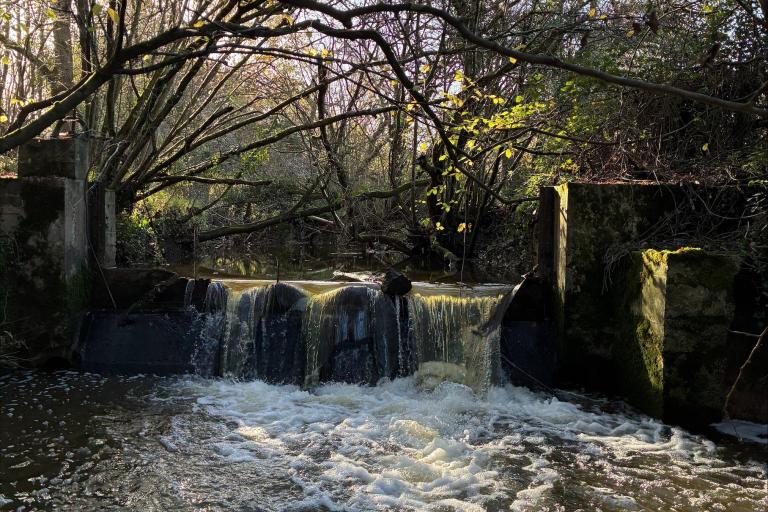
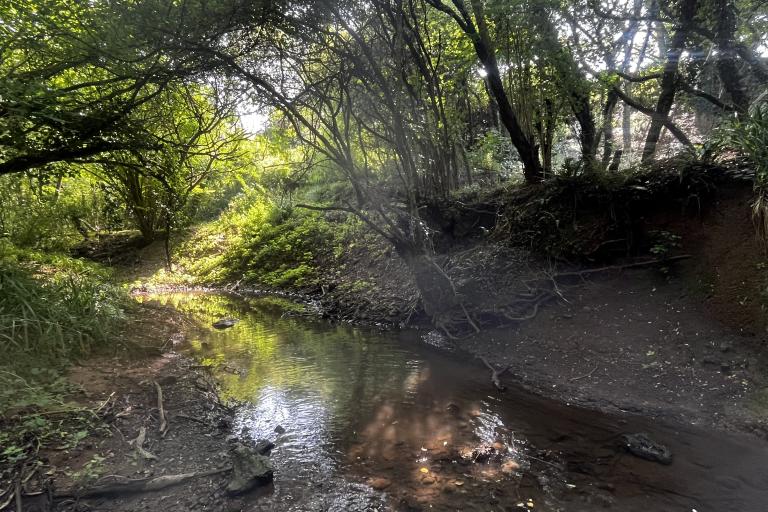
The large Sturt Weir near Wickwar no longer serves a purpose and is having a devastating impact on the flow and ecology of the Little Avon.
-
-
-
-
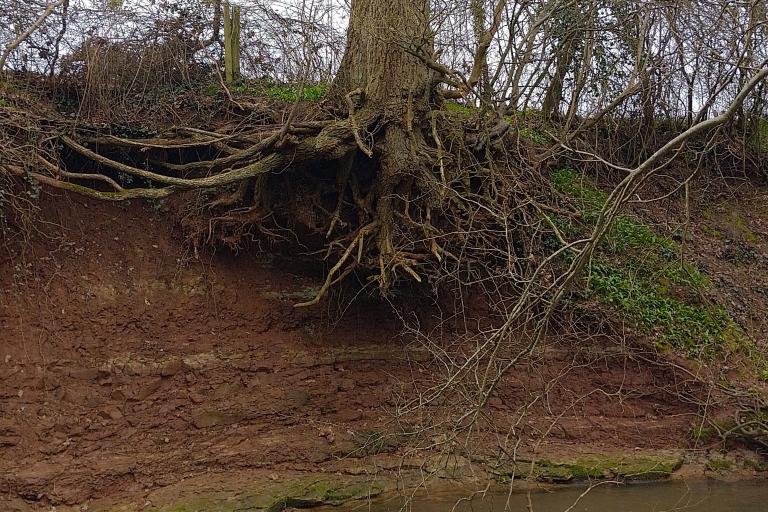
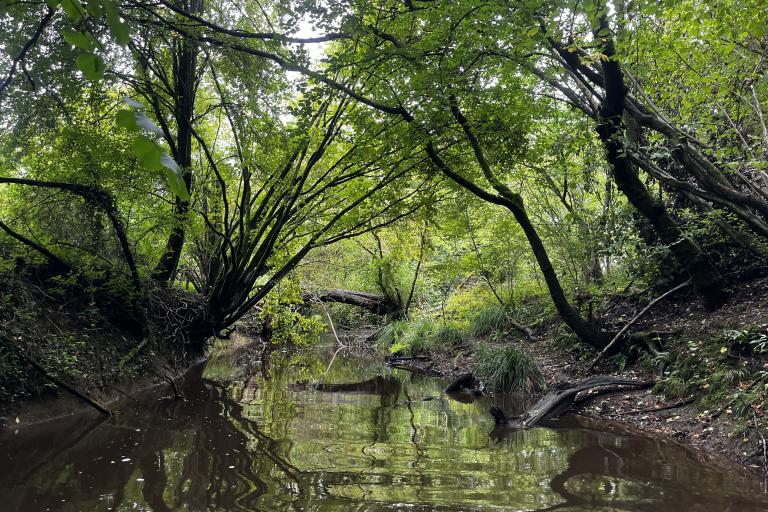
Sturt weir contributes to erosion and undercutting of the riverbank, here exposing the root structure of a tree growing nearby.
-
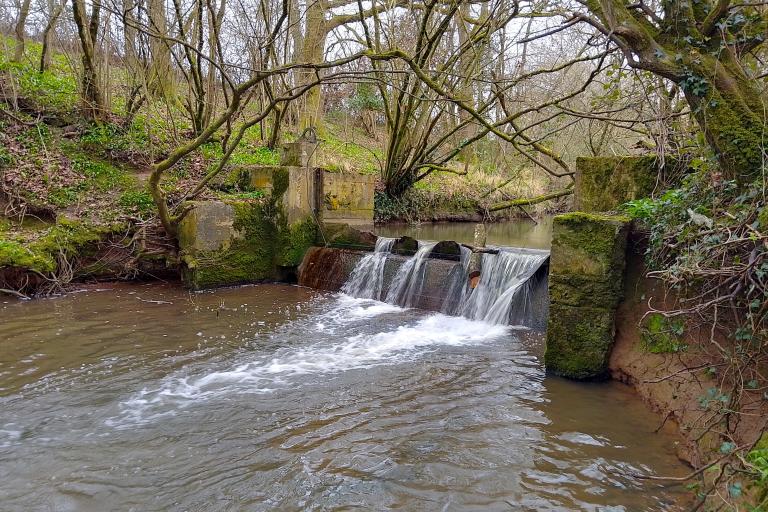
Surt Weir from a slightly different angle.
-
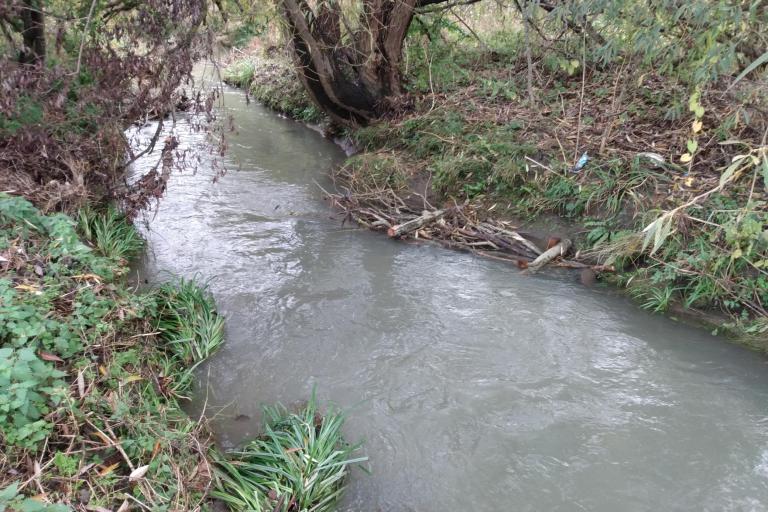
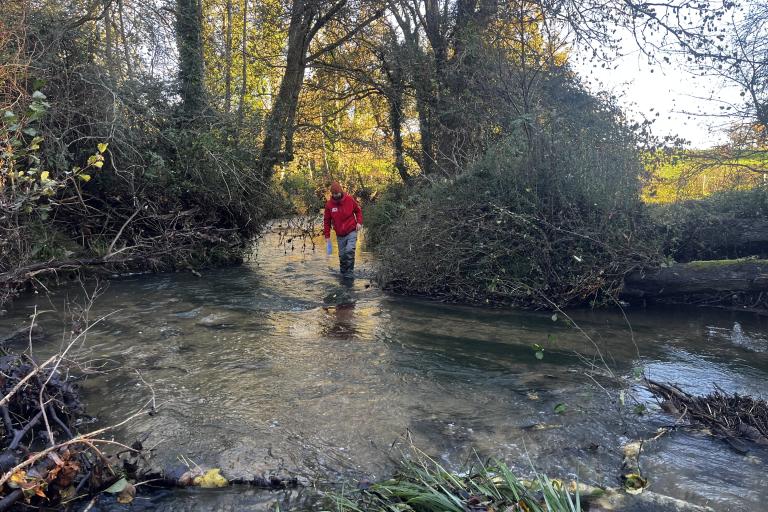
Example of a brushwood berm in action, redirecting the velocity and volume of water flowing downstream by only a few degrees, causing the river to wiggle in a more natural way.
The proposed solution
Many sections of the Little Avon still retain high levels of ‘naturalness’ and health. The removal of a small number of weirs, and installation of fish passes on those that can’t be removed, would open up access to almost 15km of rich, continuous habitat. This would re-establish higher quality spawning grounds in the north of the river’s catchment.
Where the river has been straightened there are fewer safe resting places for fish, fewer species of invertebrates in the food chain, and a lack of variation and diversity within the water. The addition of natural flow management measures such as ‘large woody debris’ (LWD) and ‘brushwood berms’ can help address this problem.
Healthy, nature-rich rivers need diverse and nature-rich riverbanks. This project will add a degree of management to the river banks missing for many years, opening areas to let through more light and create a greater diversity of plant life. This project restores natural river functions, a turning back of the clock to a time before industrialisation and urbanisation.
A phased approach
This project will engage stakeholders to ensure that everyone fully supports the actions that will restore the river’s functions and health. Some of the proposed work already has the support of relevant landowners and stakeholders, and this work will be undertaken as Phase1 of the project. Work that requires some more consultation and engagement, will form Phase 2 of the project.
This fundraising appeal is for completion of Phase 1 work only.
Phase 1: Actions and benefits
Phase 1 action 1: Removal of Sturt Weir.
Sturt weir no longer serves any practical purpose and does not have flood management or heritage value. However, by trapping the river at this point, the weir has a major impact on its vitality and health:
- Fish cannot pass the weir to access healthy habitats further north of this point.
- Immediately above the weir, the river is slow, deep and murky a dead-zone for all but old, veteran fish waiting to be washed down stream.
- Gravel and aggregates essential for maintaining healthy river beds are trapped preventing replenishment of the riverbed below the weir.
- The entrapment of the water at this point has caused the banks to be undercut by almost 6 metres and for the bedrock to become exposed.
A much smaller weir situated just upstream from Sturt Weir will be removed at the same time as part of the same Phase 1 Action 1 work.
Benefits of this action
- The natural levels and flow of the river would be reinstated.
- Fish could freely move upstream and downstream, gaining immediate access to healthy sections around Sturt Farm, Horwood Farm and Lower Woods.
- Gravels and aggregates could be carried to downstream areas, replenishing riverbed stocks greatly helping invertebrates and restoring ecosystem balance.
- The quality of upstream sections of the river, that would otherwise be healthy if it weren’t for the entrapment of the water, will quickly be restored.
- Reconnection of 15km of habitat between the source and Charfield section to improve fish migration.
Phase 1 action 2: 'Daylighting the river'.
Cutting back of bankside vegetation in selected areas to increase light levels in overgrown sections of the river.
Benefits of this action
Increased diversity of riverbank vegetation and habitat. Coppicing increases tree life span, increases habitat diversity and provides raw materials for leaky dams and large woody debris structures.
Phase 1 action 3: Installing brushwood berms.
Installing brushwood berms along straightened sections of the Little Avon near Charfield and Wickwar.
Benefits of this action
Brushwood berms alter the flow of a river, redirecting the velocity and volume of water flowing downstream by only a few degrees, which causes the river to wiggle in a more natural way. This allows sediment and gravels in the water to settle, eventually resulting in gravel bars and shallower areas where plants and invertebrates can establish. This slows the flow and reinstates the natural morphology, in turn helping riverbanks to be more varied, and the riverbed to have more variety in conditions; creating more diverse habitat and refuge space for migrating fish.
Phase 1 action 4: River monitoring.
Initiating post works river monitoring by local wildlife groups.
Benefits of this action
Increased stakeholder engagement, opportunity to support the groups, increased learning opportunities, outreach and informed early intervention.
Phase 2: Actions and benefits
The following works are not included in this fundraising appeal. They will form part of a later, separately funded phase that requires further engagement with landholders and stakeholders.
Phase 2 action 1: Retrofitting of fish ladders.
Retrofitting of fish ladders and Elver brushes to other weirs, where there are features with heritage value.
Benefits of this action
Further enhanced reconnection of 15km of habitat for a greater range of species beyond just times of high-water.
Phase 2 action 2: Tree planting.
Tree planting more riparian woodland buffer in appropriate areas.
Benefits of this action
This would reduce the amount of surface runoff that may be entering the watercourse and reduce downstream flood risk. Resilient native species that cope well in wet conditions would provide important habitat for many invertebrate species that are specific to riverbank locations.
Phase 2 action 3: Creating instream large woody structures.
Creating instream large woody structures using riparian trees to alter the flow of straight sections around Wickwar and Charfield.
Benefits of this action
Where overtopping onto marginal land is an option, this would help to create a reconnection between the river and the natural floodplains, increasing water storage capacity and ground water infiltration, improving water quality and reducing downstream flood risks.
Similarly to the brushwood dams but on a larger scale. introducing large woody debris (LWD) structures on alternate banks concentrates river flow, promoting bed scouring which reduces deposition of fine sediment in the wrong places, and increases gravel mobility, deposition and sorting. LWDs create an organic & important refuge for fish, increasing fertility rates within the stream, which in turn supports more invertebrates. It would slow the flow and reduce the amount of energy flowing downstream, again reducing flood risks.