

Blue Space Waterways Improvement, Stormwater Runoff
Health and Wellbeing, Nature Recovery, Climate Resilience

Warmley Forest Park: Pond Restoration
Introduction
Warmley Forest Park is approximately 15-hectares of semi natural open space situated immediately to the east of Siston Common and adjacent to the Bristol and Bath Cycle Path. It was formerly a clay quarry, then a landfill site, and then reclaimed as a busy and well-loved public open space. It provides extensive tracts of open grasslands, framed by hedgerows, small areas of woodland, and is traversed by footpaths. Siston Brook flanks the eastern edge of the park, and this stream corridor includes a large pond.
The pond was built around 2002 as an 'attenuation' pond, intended to increase rainwater storage capacity in the area. Slowing the flow of stormwater by capturing it and holding it within the soft landscape can help reduce flood risks. The new pond would provide more than 2 million litres of storage capacity and help ease the pressure on the Siston Brook during the critical ‘peak flow’ periods of heavy rain. As a Sustainable Urban Drainage System (SuDS) approach, the pond would also provide habitat for nature, and a beautiful new landscape feature for people to enjoy.

The Problem
The water entering the pond, carries with it grit, dirt and pollutants. In the slower moving pond environment, these particles settle on the base and build up over time. Autumn leaf fall from nearby trees compounds the problem.
The build-up of this silty layer reduces the pond’s storage capacity, making it a less effective component of efforts to reduce and manage flood risks. Its habitat and ecological value is also impacted, with the reduced volume of water more likely to become stagnant.
The water flowing into the pond is also affected by nutrients that are washed off surrounding agricultural land. Fertiliser is often used to add nutrients to make land more fertile and productive. Heavy rain can wash these nutrients off the land into the water. The reduced volume of water being held in the silted-up pond, concentrates the nutrient levels, encouraging the growth of Duck Weed and algae blooms. The Duck Weed and algae rob the water of oxygen and prevent light from reaching submerged oxygen producing pond plants, adding to the problem of stagnation and further reducing water quality.


-
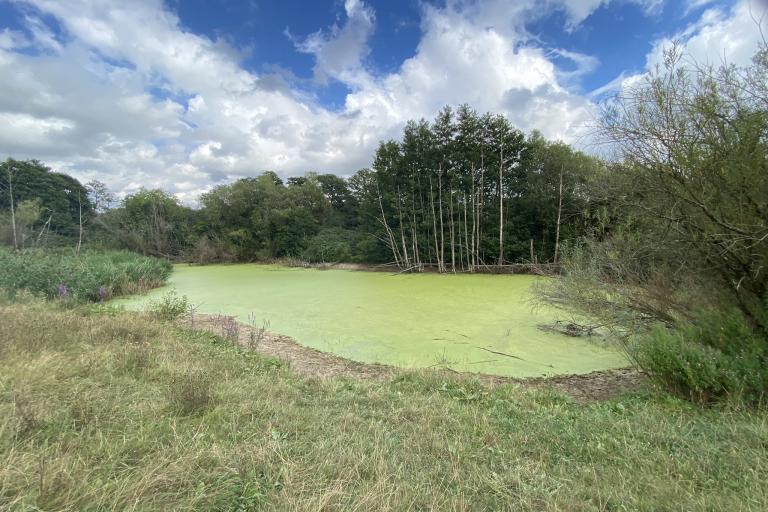
The view from the west bank shows the pond blanketed in bright green Duck Weed.
-
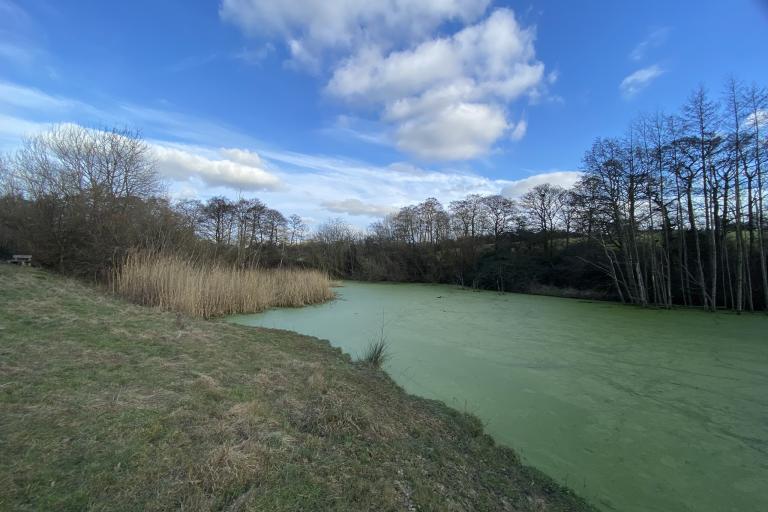
Another view of Duck Weed from the west bank.
-
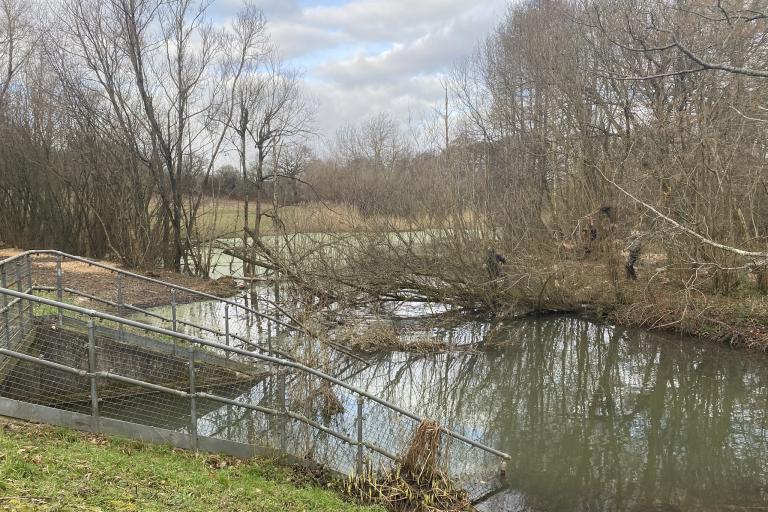
Self seeding young woodland on the east bank frequently drops woody debris and leaves into the water, adding to the silt problem.
-
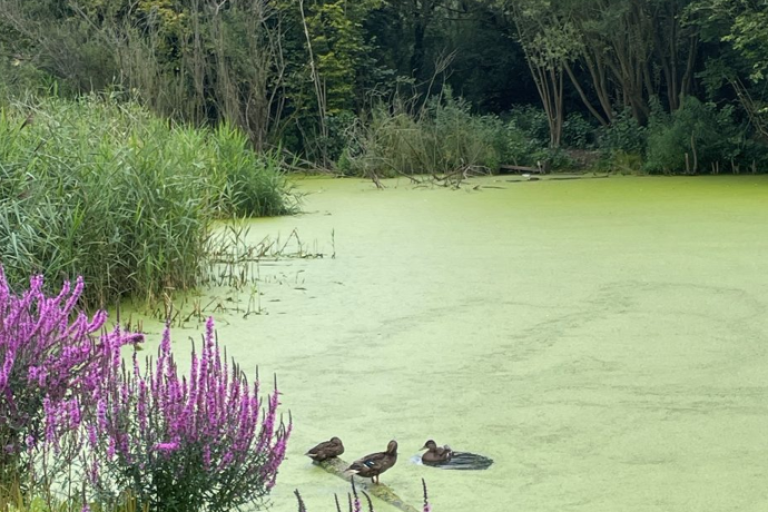
Closer view of the Duck Weed gives a good impression of its suffocating effect.
This combination of problems, over an extended period, has resulted in the pond failing to deliver the four pillars of an effective SuDS:
- It no longer captures and stores the intended quantity of stormwater.
- The water that is stored is of poor quality.
- The poor-quality water has low habitat and ecological value for wildlife.
- The stagnant, bright green water is not somewhere visitors want to spend time.
The Solution
This project deals with the removal of the chocking build-up of silt that has accumulated over the last 25 years. This is the most pressing and urgent action needed to rescue and restore the pond. Across the 1,556M2 area of pond, 1,090M3 of sediment and silt will be removed. A cubic metre converts to 1,000 litres of additional water capacity. The removal of 1,090 M3 of silt equates to an additional capacity of over a million litres of stormwater.
De-silting the pond and resurrecting its storage capacity means it can play a more effective role in managing and reducing flood risks and better protect the historic Siston Brook. Decreasing the volume of silt and increasing the volume of water will also improve water quality, oxygen levels, and the pond’s ecological and habitat value.
The main areas of work that will be undertaken include:
- An ecological survey will ensure anything of value is protected and provide a baseline to measure the improvement achieved.
- Removal and translocation of any fish or wildlife living in the pond.
- Selective felling and clearance of small trees growing around the edge of the pond, building on the success of clearance undertaken three years ago. More daylight reaches the pond, and less debris and leaf fall enters the water.
- Removal of approximately 700mm depth of sediment and silt, increasing stormwater storage capacity by around 1 million litres.
- Disposal of the silt by relocating elsewhere on-site.
- Removal of large logs and fallen trees from the pond and pond edge.
Help us turn the tide, breathe new life into this pond and unlock its many benefits for people and nature.


-
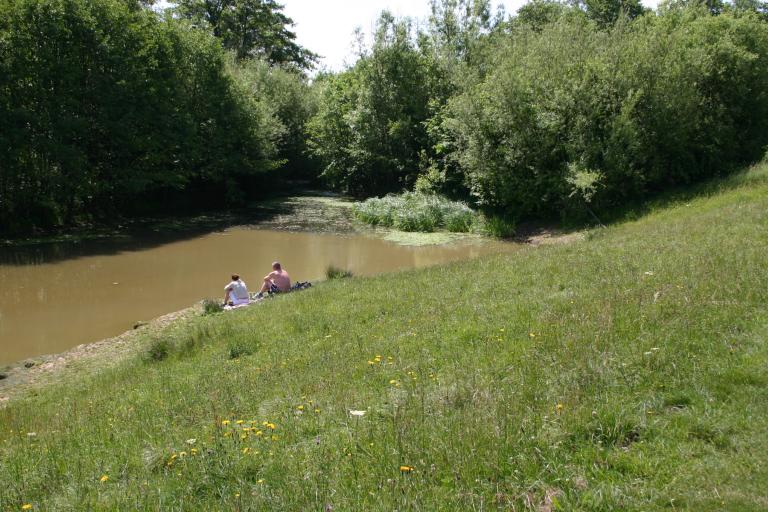
A photograph of visitors enjoying the pond before the Silt and Duck Weed took over.
-
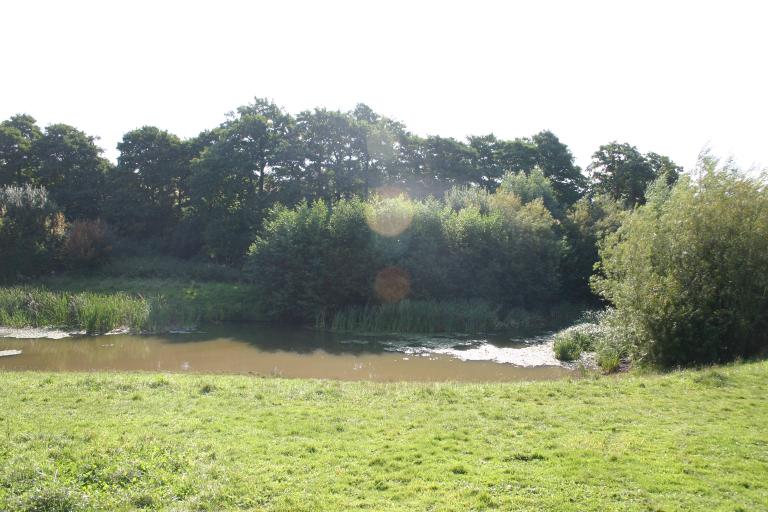
An earlier photograph showing the pond before the silt and Duck Weed took over.
-
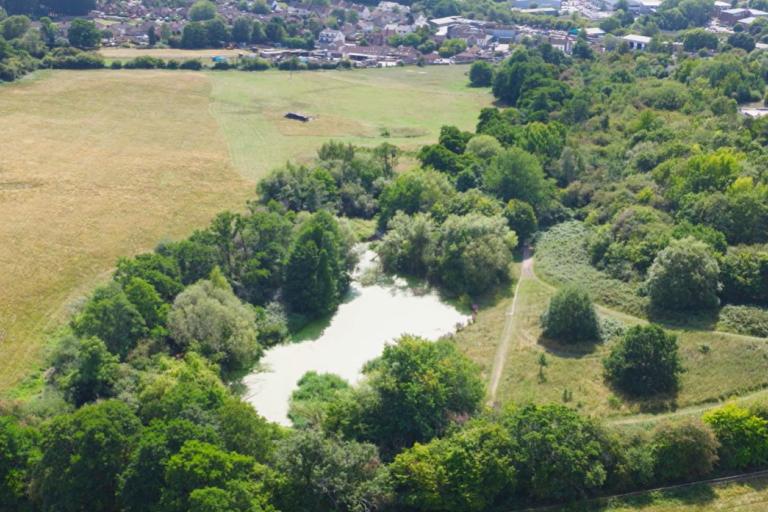
Drone shot showing the pond in its landscape context.
-
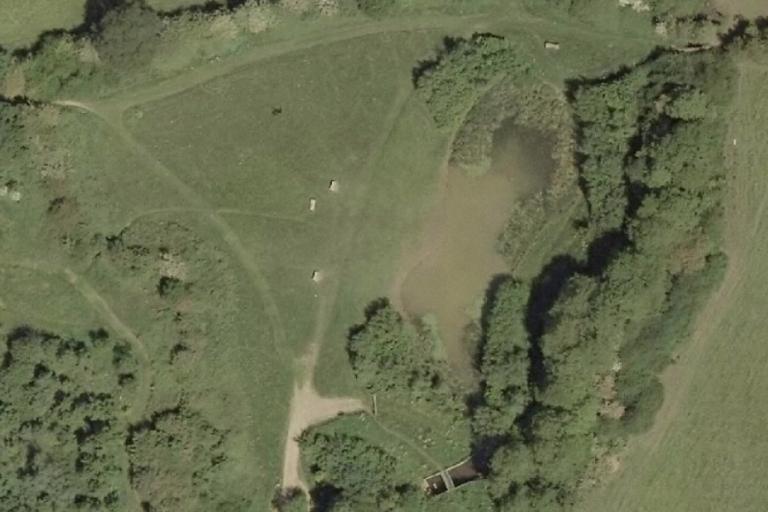
Aerial photograph from 2006 showing a much clearer surrounding landscape and a healthier, clear, weed free body of water.
-
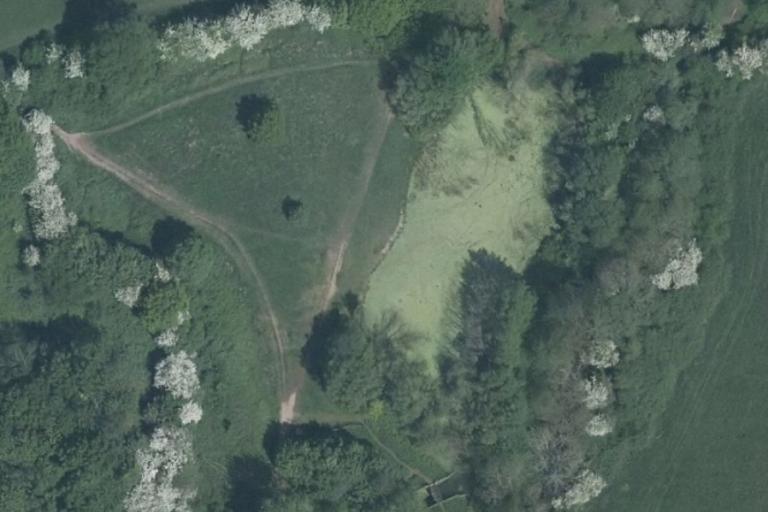
2020 aerial photograph showing the encroaching woodland and blanket of Duck Weed.
-
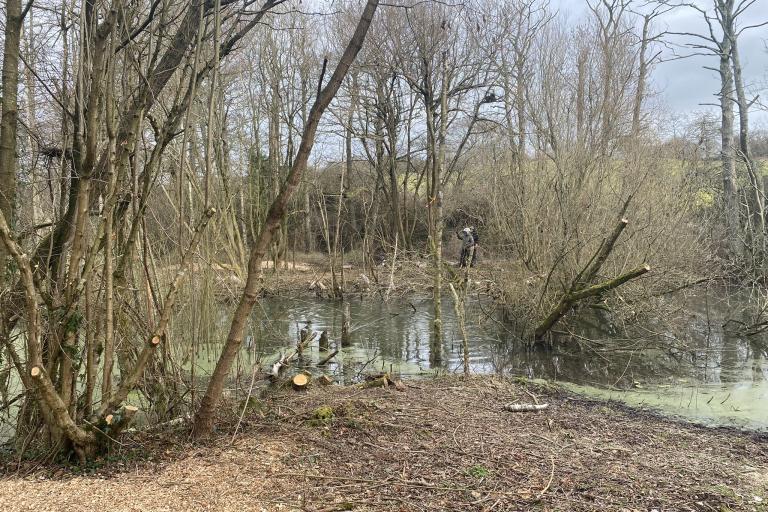
Thinning out encroaching young trees in 2023.
Why it matters
Ecology
Life in freshwaters is under severe threat. Around 1,000 freshwater species are now listed as rare or threatened in the UK: a shocking 25% of all those assessed.
The abundance of 682 terrestrial and freshwater species has on average fallen by 32% across England since 1970.
Over 10% of our freshwater and wetland species are threatened with extinction in the UK, and we’ve lost 90% of the wetland habitats our landscapes once supported. The figure is much higher for some types of wildlife. A recent assessment shows that 31% of amphibian and reptile species in Great Britain are in a threatened category, highlighting widespread declines.
Recent research in 2016 by Froglife and the University of Zurich has shown that common toad populations have declined across the UK by 68% over the past 30 years.
Despite their size, research shows that – at landscape scale – ponds support more biodiversity than larger waterbodies, including rivers and lakes.
2/3 of freshwater species can be found in ponds.
50% of the UK’s ponds have been lost in the 20th century.
80% of remaining UK ponds are in a poor state.
Pollution from agriculture and sewage overflows results in poor water quality affecting designated freshwater habitats. Natural England reported in 2019 that 89.7% of SSSI river units were in unfavourable condition and Natural Resources Wales found in 2020 that 60% of SSSI freshwater biodiversity features were unfavourable.
Rivers, and the aquifers that feed them such as Siston Brook, are the source of our water supplies. They provide drinking water to homes and businesses, and water for industry and farming. Healthy wetlands and rivers are essential to sustaining these supplies.
Flood
Our combined freshwater landscape features, the rivers, brooks, lakes and ponds, all help to provide communities with protection from flooding. By holding stormwater in the landscape and slowing and reducing the peak flow through our river systems, they help to prevent it rushing into downstream towns, villages, and communities.
The Warmley Forest Park pond was built to increase stormwater storage capacity. It helps take pressure off the Siston Brook, which has to cope with increased runoff from the hard, impermeable surfaces of nearby roads. Removal of silt to a depth of 700mm across this pond will reinstate over 1 million litres of stormwater storage capacity.
Amenity
Evidence consistently shows that time spent outdoors in pleasant natural environments is good for our health and wellbeing and one of the fastest and most effective ways of reducing stress.
The calming presence of water reduces stress and promotes mental clarity. Spending time near a pond allows your mind to rest, offering a natural form of mindfulness that helps alleviate anxiety and improve focus. The calming effect of ponds helps individuals process emotions more effectively, leading to greater emotional stability and happiness over time.
Ponds contribute to better air quality by releasing negatively charged ions into the atmosphere. These ions help purify the air by reducing pollutants such as dust mites, allergens, and harmful particles. The clean air around ponds is particularly beneficial for individuals with respiratory illnesses such as asthma and allergies. The combination of fresh air and higher oxygen levels contributes to improved lung function and overall respiratory health.