


Unlocking the Little Avon River: Naturally better for nature
Summary
The majority of rivers in the Bristol Avon catchment, including the Little Avon, are of ‘Poor to Moderate Ecological Status’ (as classified at 2019[1]). Restoring the conditions that promote sustainable and healthy fish populations is key to improving the ecology of these rivers, and the Severn estuary, which is internationally designated for its ecological importance as a European Marine Site. There is now an opportunity to achieve a considerable step towards this aspiration for the Little Avon River. This project will help nature as well as bring benefits for communities in the wider catchment.
Thankfully, there are some comparatively simple measures which would reconnect important sections of the Little Avon that have been broken up by historic infrastructure such as weirs. Reconnecting these sections would restore fish numbers by giving them access to more and better breeding habitats, resulting in far reaching benefits for the river’s wider ecology and biodiversity.
Developed in partnership with and endorsed by the Bristol Avon Rivers Trust (BART) and the Bristol Avon Catchment Partnership (BACP), this project aligns with and supports delivery of the Bristol Avon Fish Recovery Strategy.
[1]Water Framework Directive - Environment - European Commission
The Problem
Over the past 300 years, the Little Avon and the Bristol Avon and its tributaries have been constrained by hundreds of weirs, retaining walls, and culverts. These were built for the benefit of industry and navigation, agriculture and urban development, but to the detriment of nature. Weirs don’t only affect rivers where they exist; they have knock on effects for kilometres up and down stream. This usually means the water above weirs is slower and deeper, and siltier, supporting less plants and invertebrates as a result. Rivers downstream also have over-deepened banks, receive less gravel from upstream, and can dry up in low flows periods like summer. This often has devastating effects on the river's overall health for kilometres up and down stream. Crucially weirs often act as impenetrable barriers for fish including salmon, trout and eel who need to be able to move between the headwaters and the ocean to complete their lifecycle and breed.
Rivers like the Little Avon have been dredged, straightened, re-sectioned and realigned – with the primary purpose of draining land and getting water out to sea as quickly as possible. Historically there was little or no regard for the impacts of this on nature. We are now paying the price.
- Man-made barriers are a major challenge for fish passage, reducing their breeding success.
- The loss of natural habitats, the safe spaces for feeding and breeding, has decimated stocks of resident and migratory fish and the biodiversity and ecology of the river.
- The straightening of the river and disconnection with floodplains and natural groundwater infiltration has reduced storage capacity, increased flood risks and degraded water quality making communities more vulnerable and less resilient to flash flooding events.
- Our health and wellbeing are depleted through lack of access and interaction with a vibrant and nature rich environment.
- I haven’t mentioned stormwater runoff and associated pollutants here. This can be added if the project in any way addresses these issues.


-
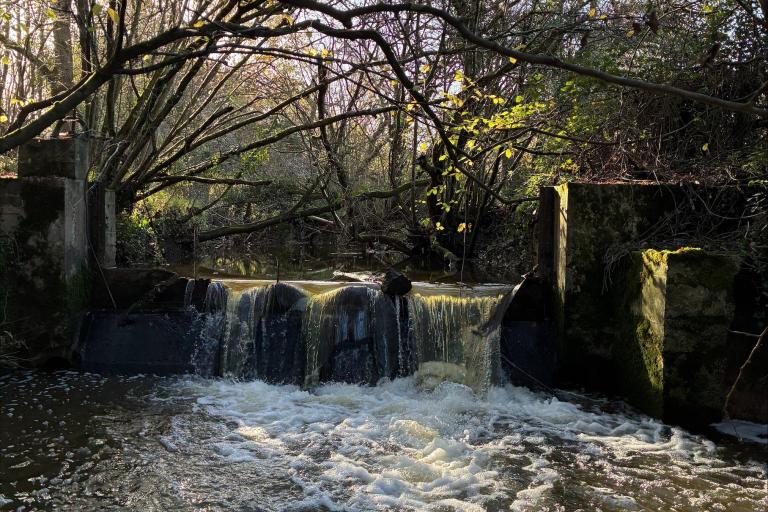
The large Sturt Weir near Wickwar no longer serves a purpose and is having a devastating impact on the flow and ecology of the Little Avon.
-
-
-
The Proposed Solution
There are many sections of the Little Avon that are considered to still retain ‘high levels of naturalness’. The challenge is to better connect these areas to enable fish to reach and move between them. The removal of one very large weir and modifications to other weirs, would open up access to almost 15km of rich, continuous habitat, and would re-establish higher quality spawning grounds in the north of the river’s catchment.
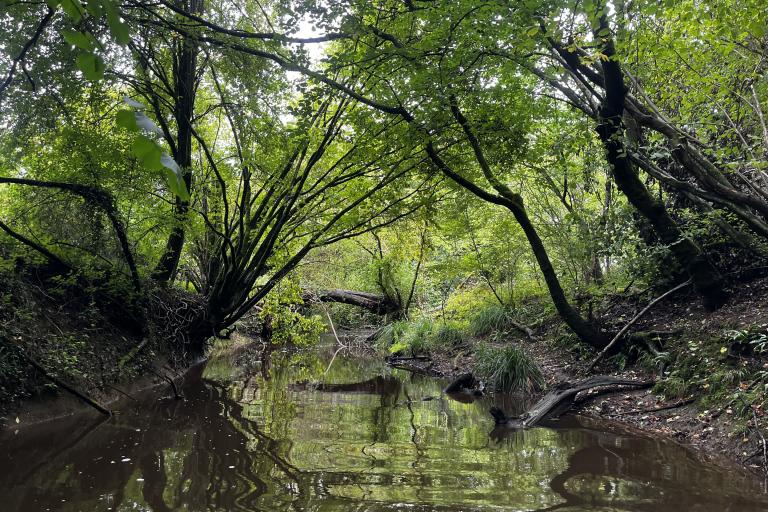
Many areas of the river are long and straight with little variation within the riverbank. This results in fewer safe resting places for fish within the river, fewer species of invertebrates in the food chain, and no variation within the water such as backwaters, eddies and upwellings. The addition of natural flow management measures such as ‘large woody debris’ (LWD) and ‘brushwood berms’ would create a much richer diversity of depth and flow along the river’s length.
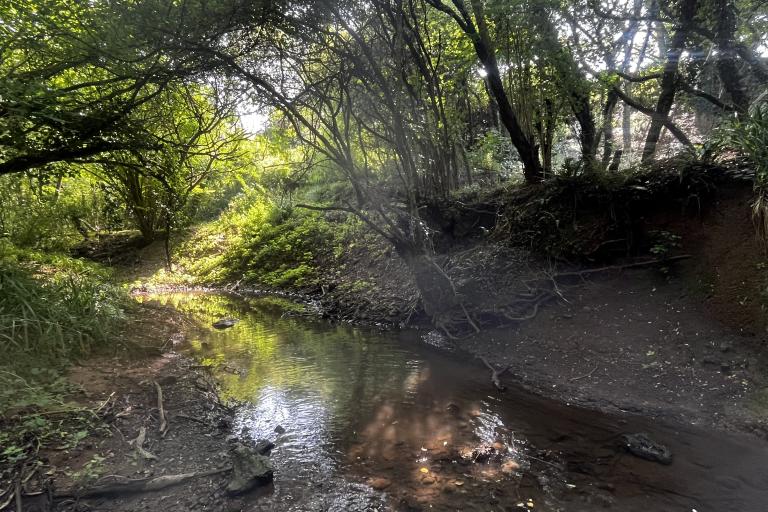
Healthy, nature-rich rivers need diverse and nature-rich riverbanks. This project will add a degree of management to the river banks missing for many years, opening areas to let through more light and create a greater diversity of plant life. This project restores natural river functions, a turning back of the clock to a time before industrialisation and urbanisation.
Actions and Benefits
Action 1: Weir removal at Wickwar.
Benefit:
Reconnection of 15km of habitat between the source and Charfield section to improve fish migration. The weir no longer serves a purpose and is having major acute and chronic impacts on this section of the Little Avon. The river has undercut the banks by almost 6 meters, exposing bedrock. The ability for fish to pass this barrier is almost zero, due to a large concrete apron and a tall vertical wall. The river upstream is murky, slow and very deep, creating a near dead zone for all but old, veteran fish waiting to be washed down stream. Within 1km of the weir upstream, are sections of the little Avon that flow through beautiful hazel coppice and the river morphology is otherwise healthy if not for the impounded water levels. Removing the cause of this impoundment would unlock near immediate access to the healthy sections around Sturt Farm, Horwood Farm and Lower Woods.
Action 2: Retrofit of fish ladders and Elver brushes to smaller weirs, for example at The Old Bone Mill nr. Charfield
This is because this bridge has heritage value and is unable to be removed. Therefore, retrofitting of passes is more appropriate.
Benefit:
Further reconnection of 15km of habitat for a greater range of species beyond just times of high-water.
Action 3: Increasing light levels in overgrown areas of the river.
Benefit:
Increased diversity of riverbank vegetation and habitat. Coppicing increases tree life span, increase habitat diversity and provides raw materials for leaky dams and large woody debris structures.
Action 4: Installing brushwood berms along straightened sections of the Little Avon near Charfield and Wickwar.
Benefit:
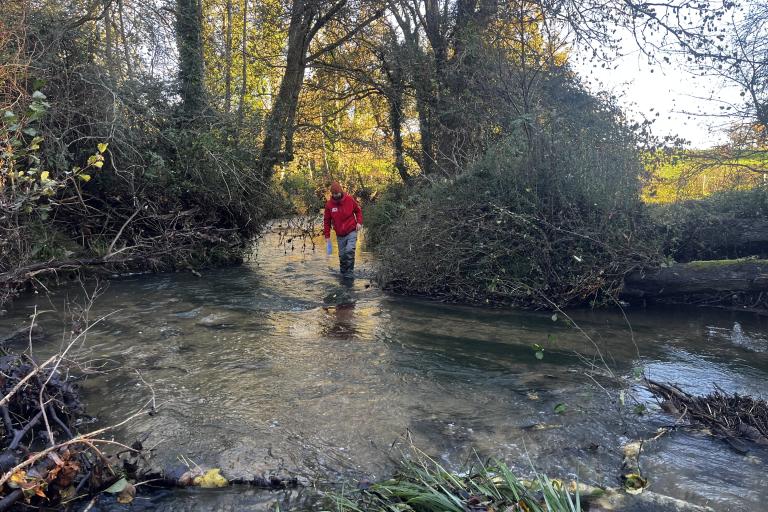
Brushwood berms alter the flow of a river, redirecting the velocity and volume of water flowing downstream by only a few degrees, which causes the river to wiggle in a more natural way. This allows sediment and gravels in the water to settle, eventually resulting in gravel bars and shallower areas where plants and invertebrates can establish. This slows the flow and reinstates the natural morphology, in turn helping riverbanks to be more varied, and the riverbed to have more variety in conditions; creating more diverse habitat and refuge space for migrating fish.
Action 5: Creating instream large woody structures using riparian trees to alter the flow of straight sections around Wickwar and Charfield.
Benefit:
Where overtopping onto marginal land is an option, this would help to create a reconnection between the river and the natural floodplains, increasing water storage capacity and ground water infiltration, improving water quality and reducing downstream flood risks.
Similarly to the brushwood dams but on a larger scale. introducing large woody debris (LWD) structures on alternate banks concentrates river flow, promoting bed scouring which reduces deposition of fine sediment in the wrong places, and increases gravel mobility, deposition and sorting. LWDs create an organic & important refuge for fish, increasing fertility rates within the stream, which in turn supports more invertebrates. It would slow the flow and reduce the amount of energy flowing downstream, again reducing flood risks.
Action 6: Tree planting more riparian woodland buffer in appropriate areas.
Benefit:
This would reduce the amount of surface runoff that may be entering the watercourse and reduce downstream flood risk. Resilient native species that cope well in wet conditions would provide important habitat for many invertebrate species that are specific to riverbank locations.
Action 7: Initiating post works river monitoring by local wildlife groups
Benefit:
Increased stakeholder engagement, opportunity to support the groups, increased learning opportunities, outreach and informed early intervention.
Why These Special Species Matter:
Grayling and trout are ecologically important because they thrive only in clean, cold, well‑oxygenated rivers, making them strong indicators of healthy freshwater systems. Their role in the food web is central: they help control aquatic insect populations while also providing food for birds, mammals, and larger fish, supporting overall biodiversity. These species are highly sensitive to pollution, habitat degradation, and rising water temperatures, so changes in their populations often signal wider environmental stress. Their spawning and feeding behaviours also help maintain riverbed structure, benefiting many other organisms that rely on gravel habitats. Beyond their ecological roles, grayling and trout hold cultural and economic value, especially in recreational angling, which often drives broader conservation and river‑restoration efforts.
European eels and lampreys are ecologically significant because they occupy unique and ancient niches within freshwater and marine ecosystems. Both groups undertake remarkable long‑distance migrations, linking river systems with the open ocean and transporting nutrients across vast geographic scales. Their life cycles make them sensitive to barriers such as dams, pollution, and habitat loss, so their decline often signals deeper environmental disruption. As predators, scavengers, or filter‑feeders depending on the species, lampreys help regulate fish populations and recycle organic matter, while eels play key roles as both predators and prey, supporting birds, mammals, and larger fish. Their presence contributes to the overall balance and resilience of aquatic food webs. Beyond their ecological roles, these species have deep cultural importance in many European regions, and efforts to conserve them often drive broader improvements in river connectivity and water quality.